REVIEW · PUNTA CANA
Zip Line – Half Day Adventure
Book on Viator →Operated by AJC BAYAHÍBE TOURS · Bookable on Viator
A good zip line feels effortless, but safety isn’t optional. This half-day Punta Cana adventure leans hard into protective gear and a real circuit, including the Cable Mega Splash water landing. I especially like the dual-line setup with a lifeline plus an anti-drop backup, and I also like that guides handle the setup so you can focus on flying. One thing to consider: you do need a moderate fitness level because there’s a lot of climbing and you’ll spend time on platforms before your runs.
You’re looking at about 4 hours total, usually with hotel pickup, and a group size capped at 20. At $80 per person, the value comes from the amount of flying you get for a short window and the fact that it’s built around safety routines, not just speed. If weather doesn’t cooperate, your day can shift or be refunded, so keep your schedule flexible.
In This Review
- Key things I’d clock before you go
- The big promise: long cables and a safety-first setup
- Getting to the platforms: pickup, ride time, and what 4 hours really means
- Your harness system: dual lines, lifeline, and anti-drop protection
- The circuit in plain English: 6 lines, a Himalaya bridge, and Cable Mega Splash
- Guides set the tone: briefings, patience, and pacing under 20
- What to wear and bring for stairs and a water landing
- Price and value: is $80 worth it in Punta Cana?
- Who this tour fits best (and who should rethink it)
- Practical caution flags: reliability and communication
- Should you book this zip line in Punta Cana?
- FAQ
- How long is the zip line adventure?
- Where is the tour located?
- Do you offer hotel pickup?
- What safety gear do I need to wear?
- How many people are in the group?
- What fitness level do I need?
- What if weather is bad?
- What is the cancellation window?
Key things I’d clock before you go
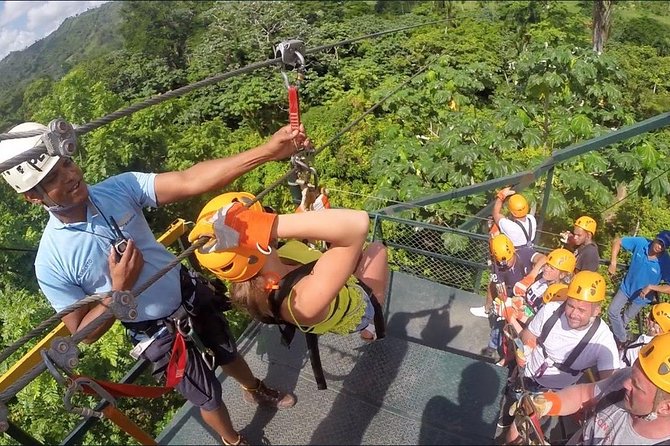
- Dual-line cable system with a lifeline: you stay attached through the circuit for extra security.
- Cable Mega Splash water landing: a memorable finish that’s part of the main action, not a side show.
- A real harness-and-helmet routine: guides brief you and fit you before you start flying.
- Small group cap (20 people): you’re more likely to get smoother pacing and personal attention.
- Quiet-day bonus: if fewer people show up, the circuit can feel faster and more relaxed.
The big promise: long cables and a safety-first setup
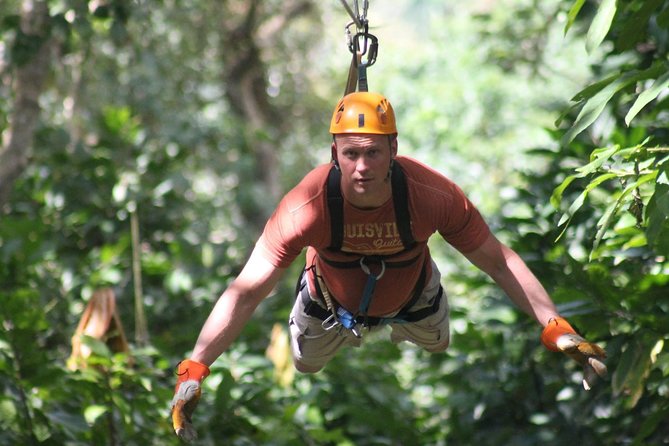
This isn’t framed as a casual “hold on and hope” zip line. It’s built around a structured approach: professional guides run safety briefings, help you with equipment, and keep the flow moving so you’re not left guessing. That matters because zip lines are physical—there’s harnessing, helmet checks, climbing to platforms, and then trusting a system you can’t see up close.
What I like most is how the safety design is explained. You’re connected to a lifeline before entering the first platform, and you remain attached until arrival to the last line of the circuit. That is exactly the kind of redundancy that gives you psychological comfort when you’re gearing up for your first launch.
They also mention an automatic anti-drop mechanism for vertical sections. Add daily checks of equipment and infrastructure using manufacturer operations manuals, and you get a safety story that’s more than just a slogan. For a half-day activity, it’s reassuring to see the operator emphasizing repeated checks and trained staff rather than just having you sign a waiver and go.
And yes, it’s supposed to be fun. The big draw is flying through the rainforest area around Punta Cana, with multiple cable segments that end with a water landing experience.
You can also read our reviews of more tours and experiences in Punta Cana.


Getting to the platforms: pickup, ride time, and what 4 hours really means
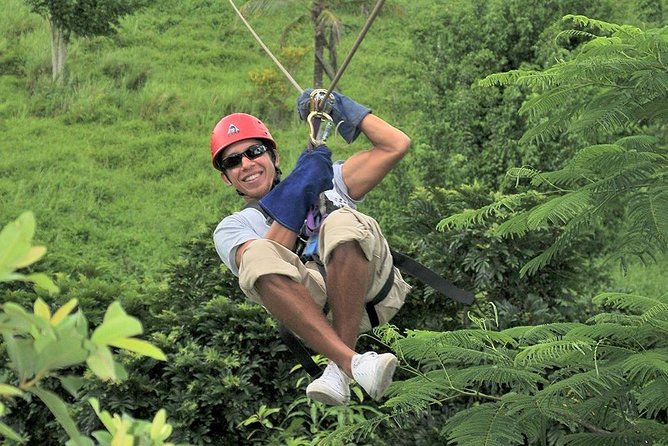
The schedule is sold as about 4 hours. In Punta Cana, that “half day” label usually depends on two things: where you’re picked up and how quickly the group cycles through the circuit.
Many hotels are on the pickup list, so it’s worth checking your specific property. If you’re close to the pickup route, you’ll likely spend more time on the actual adventure and less time waiting in the van.
Here’s what I’d watch for: the ride experience can vary. One guest described a driver making an unscheduled stop on the way to the zip line. I can’t promise that will happen, but it’s a good reminder to build in a little patience and be ready with a plan for timing—especially if you’re pairing this with dinner or a beach plan later.
If you’re the type who hates uncertainty, the best move is simple: ask the driver what stops are planned before you head out, and confirm your pickup time the day before. You’ll feel calmer once you’re on the road.
Your harness system: dual lines, lifeline, and anti-drop protection
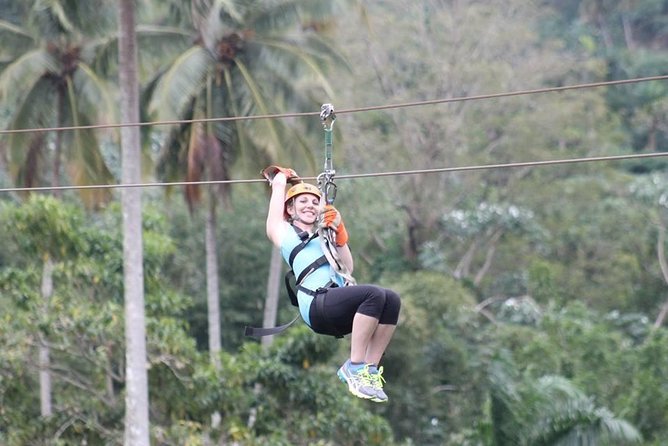
Let’s talk gear, because this is where safety gets real. You’ll be equipped with harnesses and helmets. They specifically mention Petzl equipment and fixed-line systems from Continuous (listed as Continuous our Life). You’re also in a dual line setup, which the operator describes as being paired with a lifeline at the same time.
In practical terms, that means your connection doesn’t rely on a single attachment point. You’re attached before the first platform, then you’re released only upon arrival to the last line of the circuit. That reduces the “worst case” stress people feel when they imagine a connection shift mid-ride.
They also describe daily equipment and infrastructure checks according to manufacturer manuals, plus highly trained and experienced staff guiding the process. I read this as: they want you to feel secure right away, not only after you’ve watched someone else go first.
And here’s a small but important mindset shift. A zip line isn’t only about the flight. It’s also about what happens between platforms—harness adjustments, helmet placement, and the climbing steps that get you from one launch point to the next. If you’re comfortable doing that physical work, you’ll enjoy the flying part more.
The circuit in plain English: 6 lines, a Himalaya bridge, and Cable Mega Splash
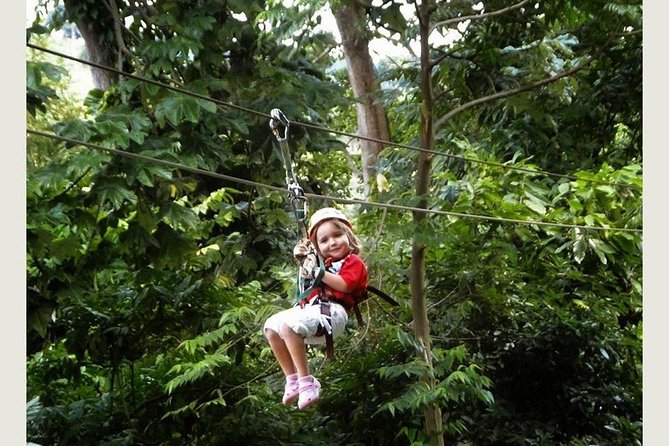
The description uses a few different ways to count the experience, but the core adventure is consistent: it’s a circuit through multiple zip lines plus a bridge segment, ending with Cable Mega Splash.
You’ll hear about a circuit of 6 lines plus a Himalaya bridge, and you’ll also see references to 12 ziplines and Cable Mega Splash with a water landing. The operator also highlights dual-line cables, which can explain how the same physical circuit can feel like a lot of “rides” depending on how the cable segments are counted.
Either way, plan to spend your half day working through several flying sections. That “many ziplines” promise matters because it turns the activity from a single highlight into a true progression. You get a rhythm: clip in, fly, reset, repeat.
The Himalaya bridge adds variety between launches. Bridges in zip line courses usually break up the adrenaline so your body can reset. They also tend to give you different views than you get when you’re only watching the line ahead.
Then comes Cable Mega Splash. This is the part people remember because it’s not just “zip, zoom, done.” It includes a water landing, and that changes how you prepare. You’ll want to bring the right mindset: you may get wet, you may bounce into water at the end, and you’ll need to manage your belongings accordingly.
If you prefer a clean, dry photo after the tour, this segment is not the best match. If you like a moment that feels more adventurous than scenic, you’ll love it.
Guides set the tone: briefings, patience, and pacing under 20
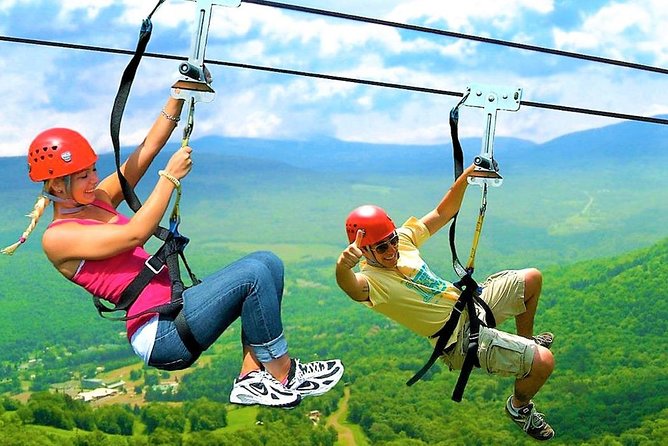
This tour is capped at 20 travelers, and that’s a big deal for how your day feels. Smaller groups usually mean fewer waits, less crowding around platforms, and a better chance for your guide to watch your setup closely.
The operator also emphasizes safety briefings and that guides will help you with equipment. That reduces the learning curve. You’re not trying to figure out harness straps while standing on a platform with people moving behind you.
One guest specifically called out Carlos and his team for making them feel comfortable and confident, with extra patience during the climb. You might not get the exact same guide, but it’s a strong signal of what the team’s best moments look like: calm coaching and personal attention rather than rushing.
Another detail that came up: on a quiet day, people described going pretty fast because they were essentially the only ones there. That can happen with small-group tours, and it’s worth noting. If your day is less crowded, you may complete more smoothly—less time waiting, more time flying.





What to wear and bring for stairs and a water landing
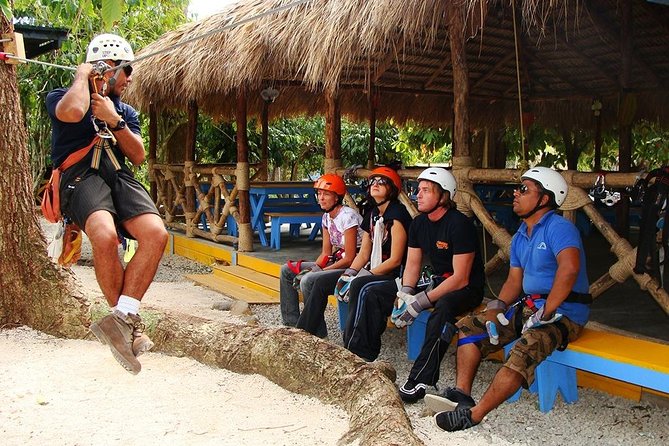
A zip line tour in the Dominican Republic can be hot, humid, and sweaty even before you start climbing. Add harness gear, helmets, and steps between platforms, and you’ll appreciate being prepared for comfort.
I’d wear:
- Closed-toe shoes you can trust on stairs and uneven surfaces
- Clothes that can handle getting damp, especially because Cable Mega Splash ends with a water landing
- A light layer you’re comfortable losing to humidity if needed
For carrying stuff, keep it simple. The course includes a water moment, so anything fragile should stay secured or left behind. If you’re bringing a phone, treat it like you’re planning for water exposure, even if you’re careful.
From the fitness angle, the “moderate” requirement isn’t about rock climbing. It’s about being okay with repeated climbing and standing on platforms. One practical tip from real-world experience: make sure you’re in shape enough for stairs. It’s funny until you’re halfway up, then it becomes very real.
If you’re unsure, don’t overthink it. Pick comfortable shoes, take your time on the climb, and let the guide’s pacing do the work.
Price and value: is $80 worth it in Punta Cana?
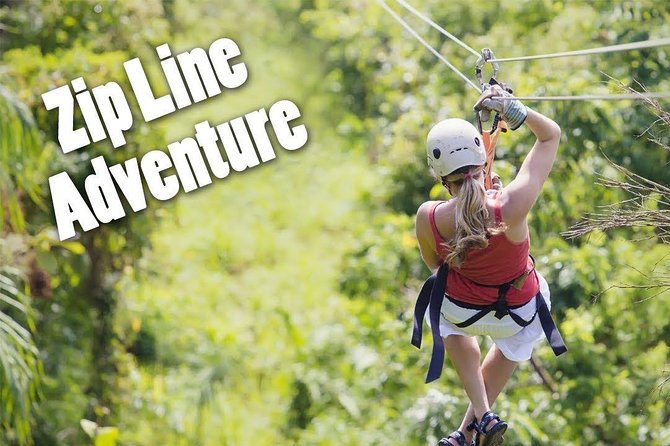
$80 per person sounds straightforward, but the real question is what you get in those 4 hours.
Here’s the value math I’d use:
- You’re not paying for one quick ride. You’re doing a circuit with multiple zip lines plus a bridge segment.
- You’re paying for safety design that includes lifeline coverage and dual-line attachment concepts, not only basic harness use.
- You may also get pickup coverage from many hotels, which reduces the hassle cost of figuring out transport.
On a short window, the “how many moments of flying” matters more than the length of each ride. This tour is designed to pack in a lot: references include 12 ziplines plus Cable Mega Splash. If you were only offered 2 or 3 lines, the price would feel steeper. With a longer circuit, it starts to feel like a full activity, not a quick stop.
Where value can drop is operational reliability. One traveler reported an instance where the company did not show up and didn’t respond to messages. Another described friction with the driver’s communication. Those are outliers, but they point to a real-world truth: with any tour, you should plan to confirm key details and keep copies of your booking info.
So is it worth it? For most people who want a real adrenaline-and-rainforest afternoon and like the idea of safety systems built into the ride, yes. For someone who needs a guaranteed, zero-uncertainty operation, it may be better to book with extra schedule buffer.
Who this tour fits best (and who should rethink it)
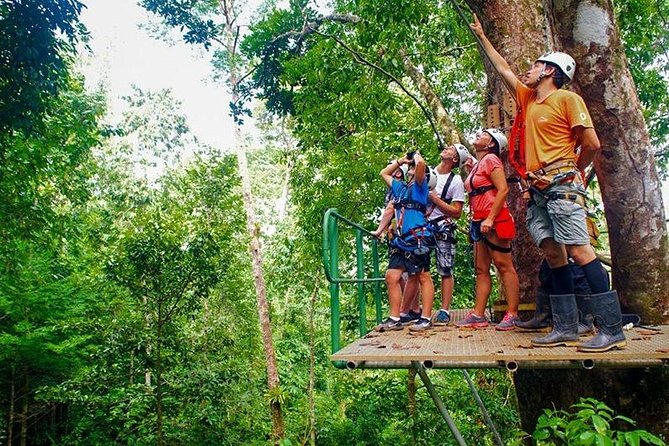
This experience suits you if:
- You want a half-day activity with multiple flying segments
- You’re okay with climbing to platforms and spending time on the course
- You prefer to be guided through safety setup rather than figuring it out alone
- You’d enjoy a water landing moment instead of only dry scenery
It may not suit you if:
- You’re expecting a fully stroller-friendly, low-effort outing. The physical fitness requirement is moderate, and stairs are part of the deal.
- You hate water surprises. Cable Mega Splash ends with a water landing, so plan for wet conditions.
- Your schedule can’t tolerate weather changes. The operator notes the experience requires good weather.
For couples, this is a great “do something active together” trip. For families, it’s more about age and comfort with harness equipment and climbing than just age numbers, since none are provided here. For solo travelers, it can be fun because the tour is group-based and designed around shared briefing and pacing.
Practical caution flags: reliability and communication
I’m going to be honest in a practical way. The safety system and gear sound serious, and that’s the part you care about most. But operations still involve people, pickup routes, and timing.
One negative experience involved a complete no-show and lack of response to messages, with a refund request pending. That’s rare, but it’s enough to justify a simple habit: don’t rely only on hope that pickup will happen. Confirm your pickup details close to the day, keep your mobile ticket accessible, and have a backup plan if you don’t see your driver.
Another complaint described an unprofessional driver behavior and an unscheduled stop at a souvenir store without prior explanation. That doesn’t sound like a safety issue with the zip line itself, but it can affect your patience and timing. If you’re on a tight itinerary, ask about route stops at the start of the ride.
In short: the experience you’re buying is the zip line circuit with safety systems. The “watch outs” are the human parts—pickup communication and timing.
Should you book this zip line in Punta Cana?
If you want a half-day zip line that leans on real safety redundancies—dual-line setup, lifeline connection, and guide-led harnessing—this is a strong candidate. The circuit format (multiple ziplines plus a bridge) and the Cable Mega Splash water landing give you more than a single thrill moment.
I’d book if you:
- Are comfortable with moderate activity and stairs
- Like the idea of a structured safety routine before you fly
- Want a memorable water landing as part of the adventure
I’d think twice if:
- Your schedule is inflexible (weather can matter)
- You can’t tolerate any operational uncertainty around pickup and communication
Overall, at $80, the value comes from the amount of flying you get and the safety emphasis built into the system. For the right fitness level and mindset, it’s a fun way to spend a Caribbean rainforest afternoon—without skipping the protection part.
FAQ
How long is the zip line adventure?
It’s about 4 hours (approx.).
Where is the tour located?
It’s in Punta Cana, Dominican Republic.
Do you offer hotel pickup?
Pickup is offered, and many hotels are on the pickup list.
What safety gear do I need to wear?
You’ll be equipped with harnesses and helmets, and you’ll get safety briefings and equipment help.
How many people are in the group?
The maximum group size is 20 travelers.
What fitness level do I need?
You should have a moderate physical fitness level.
What if weather is bad?
The experience requires good weather. If it’s canceled due to poor weather, you’ll be offered a different date or a full refund.
What is the cancellation window?
You can cancel for a full refund up to 24 hours in advance of the experience start time. Changes within 24 hours aren’t accepted.