REVIEW · PUNTA CANA
Group Surf Lessons Punta Cana– Fun, Easy & Beginner-Friendly
Book on GetYourGuide →Operated by Macao Surf Camp · Bookable on GetYourGuide
Surfing your first waves can feel intimidating. This lesson makes it practical, safe, and actually fun on Macao Beach in Punta Cana. I especially liked the small-group coaching (max 3 students per instructor) and how the team keeps momentum going with extra help getting you back out. One thing to consider: the session is short, so you’ll improve fast but you may not get unlimited time on the biggest waves.
If you want an intro to surfing without the usual chaos—finding gear, guessing where to stand, figuring out what to do when you wipe out—this is the kind of setup that removes stress. You’ll get a real lesson on balance and paddling, plus guided wave-catching, not just a board rental. A solid consideration: you should expect to learn on a beginner-friendly section of the beach first, then progress only as conditions and comfort allow.
In This Review
- Key highlights before you go
- Macao Beach in Punta Cana: Where beginner surfing actually works
- The pickup rhythm: How the day starts (and why it matters)
- The 2-hour lesson format: What you actually do start to finish
- Instructor ratio and coaching style: The real reason it feels easy
- What you learn on the beach: Balance, paddling, and wave-catching
- Balance: the skill behind the first stand
- Paddling: creating speed without burning out
- Wave-catching: timing and attention
- The beach itself: Calm learning water plus room to level up
- Value for your money: Why the $115 price makes sense
- Gear and what to bring: Don’t show up underprepared
- Languages and communication: Helpful for mixed groups
- Real-life professionalism: When plans change, the team adjusts
- Morning vs afternoon: How to choose your session
- Who should book this Macao surf lesson
- Should you book it?
- FAQ
- How long is the surf lesson?
- Where does the lesson take place?
- Is hotel pickup and drop-off included?
- What’s included with the lesson?
- Do I need to bring my own surf gear?
- What should I bring to the beach?
- Are there morning and afternoon sessions?
- Is lunch, photos, or video included?
Key highlights before you go
- Hotel pickup and drop-off from several Punta Cana-area locations, including Bávaro and Uvero Alto
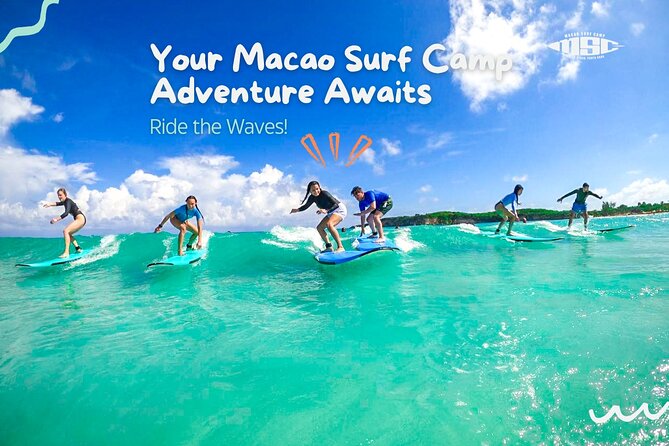
- Macao Beach learning conditions designed for first-timers and gradual progression
- Small instructor ratio (up to 3 students per instructor, with a small total group)
- All gear included: surfboard and rash guard, plus water on request
- Two hours on the sand and in the water with a mix of onshore coaching and real attempts
Macao Beach in Punta Cana: Where beginner surfing actually works
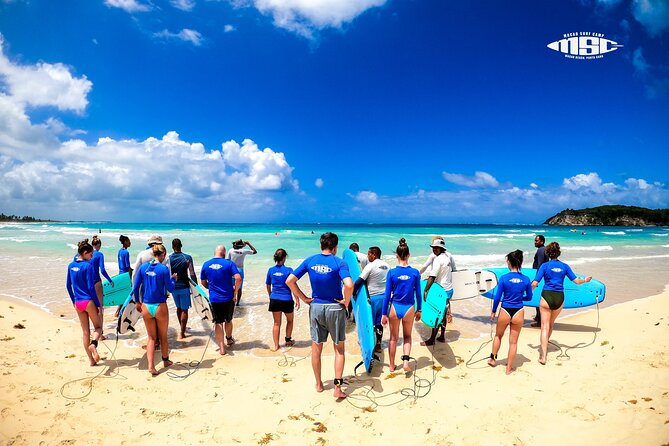
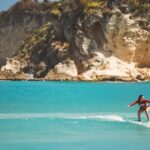
Punta Cana gets marketed as beaches, resorts, and downtime. But for surfing, one of the best nearby options is Macao Beach, in the La Altagracia area. It’s known for giving you a chance to stand up and get moving without immediately throwing you into chaos.
The big value here is that the experience is built for beginners. You’re not just dropped at the water and told good luck. You start with a brief onshore lesson, then you go into the water with guidance close by. And because the instructors teach in a small group, they can watch what you’re doing—your posture, your paddling rhythm, and whether you’re looking at the wave you’re trying to catch.
Also, the beach setting matters. Several parts of the shoreline work at different skill levels. That means you can start in calmer water and still feel like you’re learning toward the fun stuff.
You can also read our reviews of more tours and experiences in Punta Cana


The pickup rhythm: How the day starts (and why it matters)
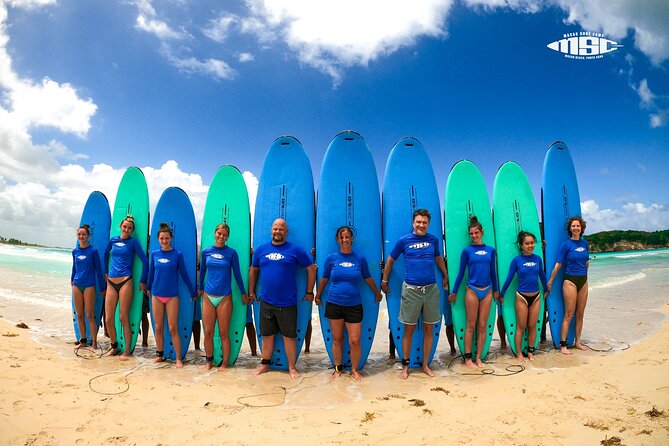
Your morning or afternoon begins with hotel pickup. The activity uses a small van transfer—about 30 minutes—to get you from the Punta Cana area to Macao Beach. Pickup covers multiple zones, including Bávaro, Punta Cana, Uvero Alto, and Macao. Drop-off also returns to Uvero Alto, Punta Cana, Bávaro, and Macao, depending on where you’re staying.
Why this matters: when you’re learning a sport you’ve never done, logistics are the enemy. If you have to taxi, find parking, or hunt down the right beach entrance, your energy goes into stress instead of learning. Here, the drive is handled, and the crew coordinates where to meet.
One small detail that makes it smoother: after you book, you’re asked to send your room number (for resorts) or exact address (for villas/Airbnbs). Then you meet the driver at a designated pickup point, with your name on the list.
The 2-hour lesson format: What you actually do start to finish
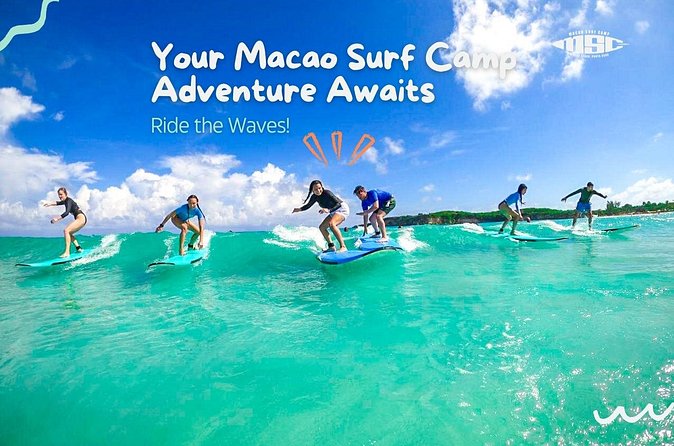
The full surfing portion is 2 hours, and it’s structured so you don’t waste time waiting around. The flow usually looks like this:
1) Meet your instructor and get geared up.
You’ll be provided with a surfboard and a rash guard. Those basics are important because rash guards help you stay comfortable in the sun and reduce skin irritation from board contact. It also means you don’t show up scrambling for something to wear into the water.
Some teams also offer water once you’re out there. In this case, you can request coconut water or bottled water.
2) Onshore basics first.
Before you stand up, the instructor teaches the fundamentals right where you can see and hear. You’ll cover balance, paddling, and wave-catching technique.
This step is underrated. When people try surfing for the first time, they often focus on standing up too early. The onshore coaching helps you understand the order: paddle to position, time your attempt, then shift your weight to catch the wave.
3) Water time with close coaching.
Then you go into the water and try it for real, with the instructor watching and correcting. This is where beginner lessons usually fall apart if the group is too big. Here, it stays small, and that keeps feedback personal.
4) Progress at a beginner pace.
You don’t have to guess when it’s your turn to try again. The instructors guide you through repeated attempts, and if you’re ready, you may shift toward bigger sets. If you’re not, you stay in the learning zone.
Instructor ratio and coaching style: The real reason it feels easy
I’ve taken beginner activities that were technically lessons, but the instructor was overwhelmed and you only got help when things went wrong. This isn’t that.
The lesson caps group size tightly: it’s designed for no more than 3 students per instructor. Even better, additional helpers can assist with paddling back out into the waves. That last part makes a difference. When you’re learning, it’s not just about riding. It’s also about getting back into position safely and efficiently.
In practice, that helps you get more attempts. You spend less time tired and more time actually building skill. And because you’re not fighting for attention, you can adjust quickly—what you learned on land you try again within minutes.
If you’re worried you’ll fall behind, relax. The coaching approach is built for first-timers.
What you learn on the beach: Balance, paddling, and wave-catching
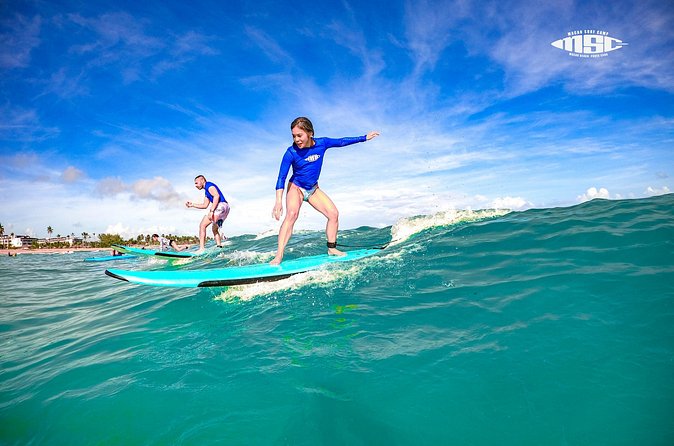
Surfing has a few repeatable actions, and this lesson targets the ones that unlock your progress.






Balance: the skill behind the first stand
Your instructor will work on how to position your body so you don’t just pop up and immediately fall. That includes where your feet go, how to shift weight, and how to stay stable when the board starts to move.
This is where small-group attention pays off. If your stance is off, you’ll feel it right away. With a coach watching, you can correct fast instead of guessing.
Paddling: creating speed without burning out
Paddling is often what beginners get wrong. People paddle too hard, too slowly, or with the wrong angle. You’ll practice technique so your board moves into position instead of just drifting.
When you combine paddling with the next skill—wave timing—you start to catch waves more consistently.
Wave-catching: timing and attention
Wave-catching is less about strength and more about reading what the wave is doing. The instructor helps you understand how to time your attempt and when to commit to standing.
You also get repeated attempts, which matters. Surfing is learn-by-doing. If you try once and then wait half the session, improvement stalls. With the group size and helper support, you typically get enough repetitions to feel progress.
The beach itself: Calm learning water plus room to level up
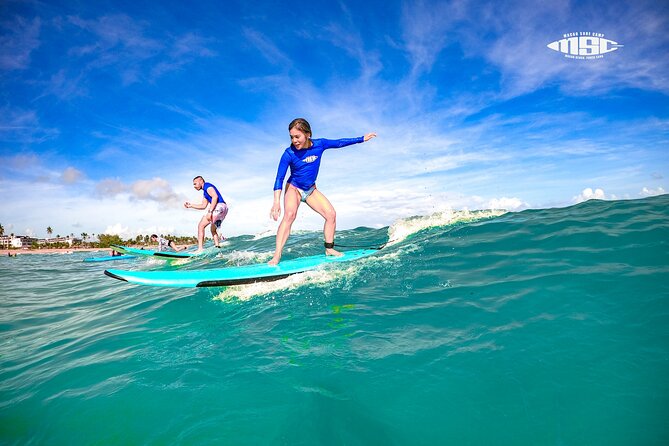
Macao Beach works well for beginners because it offers more than one type of experience along the shoreline. There’s usually a quieter area where you can practice without big chaos, and then there are parts of the water that are more challenging as you improve.
That setup is why this feels beginner-friendly without being boring. You start where you can succeed, then you graduate when you’re comfortable. You’re still learning on real surf, not in a staged environment that never teaches you anything useful.
And you’ll likely notice how quickly conditions guide the lesson. If the waves are small that day, you get more clean runs and practice timing. If it’s bumpier, the instructor helps you adjust so you keep learning instead of panicking.
Value for your money: Why the $115 price makes sense
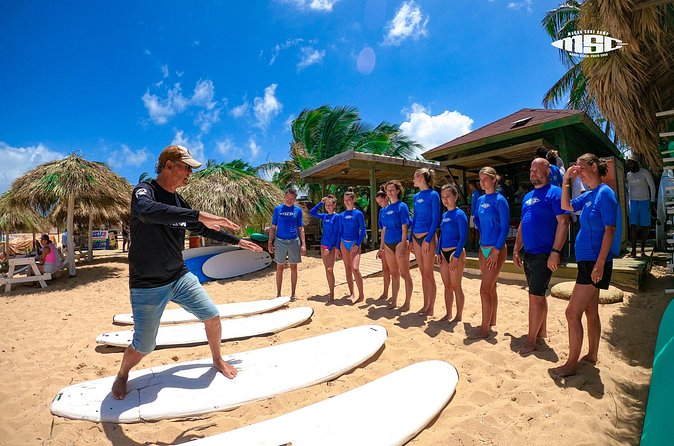
At $115 per person for a 2-hour group lesson, the value comes from what’s bundled:
- Hotel pickup and drop-off
- Surfboard and rash guard
- Professional instructor
- A guided lesson (not just access to equipment)
For a first-timer, that package is usually where the savings are. Renting a board, arranging a ride, and paying for coaching separately can add up—especially in resort areas where everything has a convenience premium.
This also isn’t a huge class where you barely get feedback. Small-group attention is part of the pricing, and it shows.
Photos and videos are extra (you can buy them at the beach), but you’re not forced into packages you don’t want. Lunch is not included either, but you can buy it on-site.
Gear and what to bring: Don’t show up underprepared
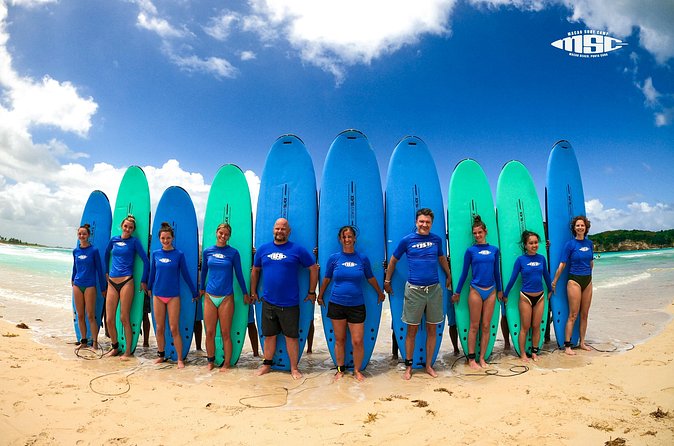
Included gear covers the core needs: surfboard and rash guard. That removes a common beginner problem—buying or renting gear that you won’t use again.
What you should bring:
- Swimwear
- Towel
- Sunscreen
- Cash
Cash matters because things like lunch (available for purchase at the beach) and optional photos/videos are not included. If you want those keepsakes, have the basics ready.
Also, remember that you’ll get sun and salt even on a cloudy day. Sunscreen is one of the best investments you can make for a surfing session.
Languages and communication: Helpful for mixed groups
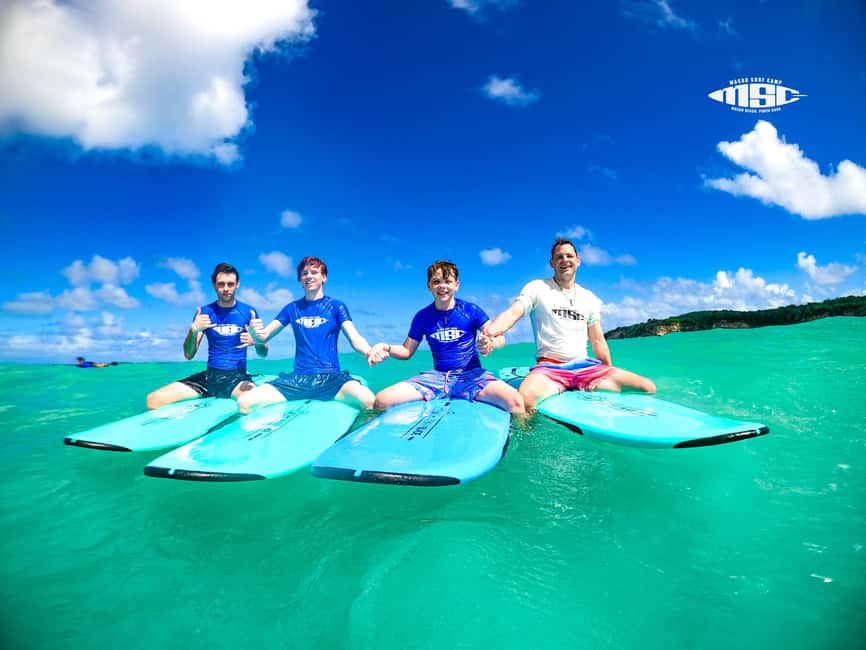
The instruction team supports multiple languages: English, Russian, Italian, Spanish, and Ukrainian. That’s a practical detail if you’re traveling with friends or family from different backgrounds, or if your comfort level with English varies.
Clear communication speeds up learning. You’ll get better results when you fully understand what you’re being asked to do—especially with something as technical as timing a wave.
Real-life professionalism: When plans change, the team adjusts
One reason I trust this kind of surf camp setup is how they handle unexpected issues. In a past experience described, one participant couldn’t join after a scheduling change. The team responded by offering a private lesson for the same price and then coordinated with the booking platform to address the unused spot.
That’s the kind of practical professionalism that matters when you’re on vacation. You’re already spending money and time to be there—so you want a provider that can solve problems without making it your job.
Another detail: an instructor named Guillermo earned praise for teaching quickly and helping switch to a different board size when needed. And a photographer named Rodolfo was also described as being strong at both capturing the moment and understanding surfing.
Those names aren’t the point—but they’re a sign that the team likely has real staff who care about the experience beyond just moving people in and out.
Morning vs afternoon: How to choose your session
You can pick either a morning or afternoon session. Since you’re in Punta Cana, your decision likely comes down to how you want to pace your trip.
- If you like starting your day with activity, a morning session often feels easier on the energy level and sets up a relaxed rest of the day afterward.
- If you’re the type who likes sleeping in or you’ve got beach time planned, the afternoon option can work well.
Because the lesson is only 2 hours, try not to schedule it right in the middle of something you can’t move. You’ll want time to shower off and dry out afterward, and you’ll likely be sun-tired even if you manage to stay cool in the water.
Who should book this Macao surf lesson
This experience is a strong fit if you:
- Want beginner-friendly surfing coaching without guessing
- Care about small groups and hands-on feedback
- Prefer hotel pickup over figuring out transport
- Want to learn on a beach that supports both practice and progression
It’s also a good option if you’re traveling as a couple, small family unit, or a small group of friends where everyone wants the same lesson plan. The multi-language support helps when your group includes different native languages.
If you’re an advanced surfer looking for a long session or heavy conditions, this might feel short. But for the goal—your first waves, better balance, and a real intro to wave-catching—this is built for you.
Should you book it?
Yes, if you want a beginner surf lesson that prioritizes safety, instruction, and actual time trying the sport. The small instructor ratio, onshore teaching, and helper support make it feel less like a chaotic group outing and more like a guided skill-building session.
Book it if you’re staying in the Bávaro / Uvero Alto / Punta Cana area and you’d rather spend energy on learning than logistics. It’s also worth it if you’re planning to do surfing only once or twice in the trip and want to make those sessions count.
Just go in with realistic expectations: you’ll learn fast, but surfing is still surfing. Expect falls, expect laughs, and expect your first real sense of standing up to come after you’ve practiced a few attempts. That’s the point—and this lesson is designed for it.
FAQ
How long is the surf lesson?
The activity lasts about 2 hours at Macao Beach.
Where does the lesson take place?
The surfing happens at Macao Beach in Punta Cana, in the La Altagracia area.
Is hotel pickup and drop-off included?
Yes. Pickup and drop-off are included, with options in the Bávaro, Uvero Alto, Punta Cana, and Macao areas.
What’s included with the lesson?
You get a group lesson with a professional instructor, plus a surfboard and rash guard. Water is also available upon request.
Do I need to bring my own surf gear?
No. The surfboard and rash guard are provided.
What should I bring to the beach?
Bring swimwear, a towel, sunscreen, and cash.
Are there morning and afternoon sessions?
Yes. You can choose either a morning or an afternoon session.
Is lunch, photos, or video included?
Lunch is not included (it’s available to purchase at the beach). Photos and videos are also not included, but you can buy them.