REVIEW · PUNTA CANA
Kiteboarding Lessons in Punta Cana
Book on Viator →Operated by Kiteology DR · Bookable on Viator
Wind and confidence in three short days. In Punta Cana, these kiteboarding lessons (with Kiteology DR) give you a real skill path in 1, 2, or 3 days, with a daily 3-hour class built around your current level. I like the small-group setup capped at four people, because you get direct feedback instead of watching from the sidelines. I also like the clear progression: trainer kite basics first, then water control with full-size gear, and finally more advanced moves like waterstarts if you pick the 3-day option.
Your day usually starts with you meeting your instructor at the academy, getting suited up, and covering safety before you head to the beach. One possible drawback to plan for: food and drinks aren’t included, so you’ll want to be ready for long sessions out in the sun and wind. The good news is they run in a range of conditions as long as it makes sense for learning, and weather issues can also trigger a rescheduled date or refund per the policy.
In This Review
- Key Points Before You Book Kiteboarding Lessons in Punta Cana
- Punta Cana Kiteboarding Lessons: Why This Course Works
- Your 1-, 2-, or 3-Day Progress Plan (Daily 3 Hours)
- 1-Day Option: A Fast Start
- 2-Day Option: From Dry Skills to On-Water Control
- 3-Day Option: More Maneuvers and First Waterstarts
- Inside the Lessons: Trainer Kite, Full-Sized Skills, and Waterstarts
- Lesson 1: Wind Theory, Wind Window, and Trainer Kite Piloting
- Lesson 2: Full-Sized Kite Control and Water Relauch Skills
- Lesson 3: Upwind Recovery, Two-Direction Riding, and Waterstarts
- Meet the Instructors: Communication That Speeds Up Learning
- Where You’ll Practice in Punta Cana (And Why Spot Choice Matters)
- Gear, Helmet, and Safety: What You Bring vs. What You Don’t
- Price and Value: Is $215.39 Reasonable for Punta Cana Kiteboarding Lessons?
- Who This Course Is Best For in Punta Cana
- Beginners
- Intermediate Riders
- Families and Small Groups
- When Weather Changes: How to Think About Wind-Dependent Learning
- Should You Book Kiteboarding Lessons in Punta Cana?
- FAQ
- How many days can I choose for kiteboarding lessons in Punta Cana?
- How long is each day of instruction?
- Is this course suitable for complete beginners?
- What happens during Lesson 1?
- What skills are covered in Lesson 2?
- What do you learn in Lesson 3?
- What’s included in the price?
- What is not included?
- What if the weather is poor?
- How many people are in the group?
Key Points Before You Book Kiteboarding Lessons in Punta Cana
- Four-person max means more hands-on time and clearer corrections
- Daily 3-hour coaching that matches your level instead of a one-size lesson
- A real progression plan from trainer kite piloting to waterstarts
- Expert instructors with strong communication, including radio coaching in-water
- Helmet use included so you don’t have to source one last minute
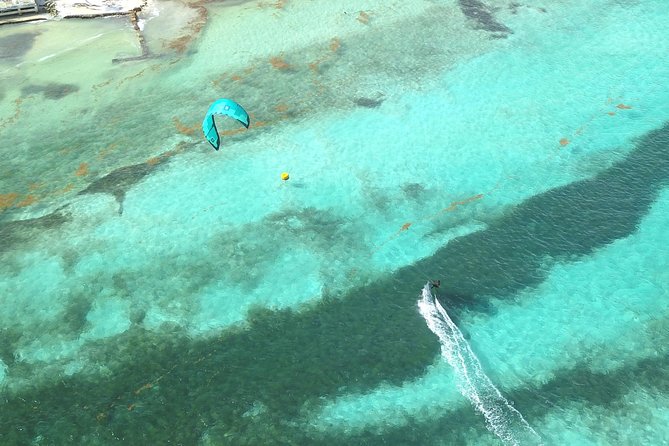
- Great learning water like knee-deep areas near popular beach spots for practicing safely
Punta Cana Kiteboarding Lessons: Why This Course Works
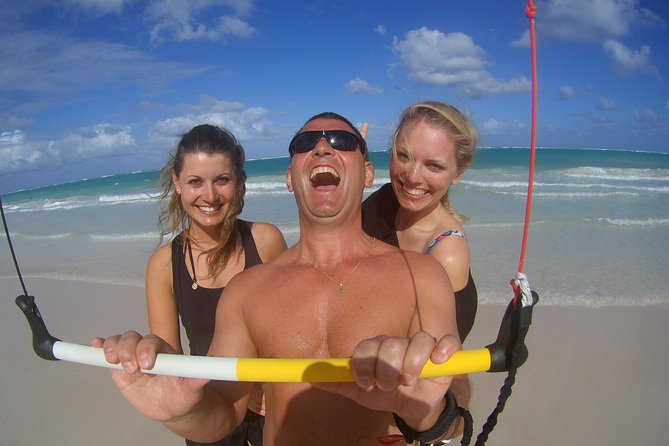
Punta Cana is famous for wind, but what matters for you is not just weather. It is how quickly you can turn wind into control. This course is built for that, with structured lessons that move from theory to hands-on kite handling to on-water skills.
You get an instructor-led flow that does not assume you already know the basics. Lesson 1 focuses on what kiteboarding is really about: wind and the way the kite behaves inside the wind window. Then it moves into equipment use and piloting with a trainer kite. That is the quickest way to avoid the common beginner trap of trying to jump too soon.
If you go for 2 or 3 days, the course shifts into water technique. You start learning how to control the kite in the water, with drills like water relaunch and downwind body dragging. By day three, the targets get more tactical: upwind body dragging to recover your board, riding in both directions, and waterstarts.
You can also read our reviews of more tours and experiences in Punta Cana



Your 1-, 2-, or 3-Day Progress Plan (Daily 3 Hours)
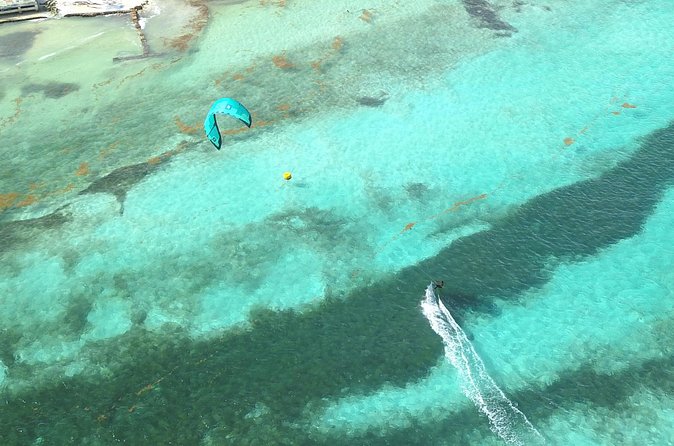
The biggest decision is how many days you have. The course is offered in 1-, 2-, or 3-day options, and each day is a daily 3-hour class.
1-Day Option: A Fast Start
If you choose the 1-day experience, you focus on Lesson 1. Expect a comprehensive introduction—wind theory, understanding the wind window, equipment basics, and your first real attempts at piloting the kite. A trainer kite is used on this first day, which makes learning safer and more controlled.
For many people, one day is a great “try it and get oriented” option. You’ll leave with a mental map of the sport and a foundation you can build on later.
2-Day Option: From Dry Skills to On-Water Control
Choose 2 days and you get Lesson 1 plus Lesson 2. Lesson 2 switches to full-sized kite skills and adds water technique.
This is where you learn to control the kite in the water and practice moves like:
- water relaunch
- downwind body dragging
The payoff is huge: you start catching the wind with more confidence and moving farther across the water instead of only managing the kite.
3-Day Option: More Maneuvers and First Waterstarts
With 3 days, you add Lesson 3. This is for you if you want more than just the basics and you’re ready to practice more deliberately.
Lesson 3 includes:
- upwind body dragging to recover the board
- riding the board in both directions
- first waterstarts
Waterstarts are one of the key “I can actually kiteboard now” milestones. Even if you do not master everything, you should come away with a clearer plan for what to practice next.





Inside the Lessons: Trainer Kite, Full-Sized Skills, and Waterstarts
The day-by-day structure is practical, not flashy. The goal is to teach you how to think and react, not just how to copy a move.
Lesson 1: Wind Theory, Wind Window, and Trainer Kite Piloting
This first lesson begins with the basics: wind theory and learning the wind window. If you want to avoid frustration later, this is the part to pay attention to. When you understand where the kite needs to be relative to you, steering and power control get way easier.
Then you move to equipment and hands-on piloting. Using a trainer kite, you practice controlling the kite and steering with one hand. That one-hand steering detail matters. It trains you to manage the kite without turning the process into a two-arm panic.
Lesson 2: Full-Sized Kite Control and Water Relauch Skills
On day two, you step up to full-sized kites. Now the lesson is about controlling the kite in the water and building technique that helps you recover and continue.
Water relaunch is the big one. It teaches you how to get going again after the kite has been in the water—critical for real learning because falls and resets are part of the sport.
Downwind body dragging helps you feel how power moves you and how kite position controls speed and direction. When you first catch that wind and zoom across the water, it is not just fun—it is feedback. Your body learns what the kite is doing.
Lesson 3: Upwind Recovery, Two-Direction Riding, and Waterstarts
Day three adds the skills that make you more independent on the water.
Upwind body dragging is about recovery. You learn a technique to get the board back into position instead of waiting helplessly. Then you ride the board in both directions, which is not just variety. It helps you progress because you learn how your stance and edge control work on each side.
Finally, you try your first waterstarts. Even partial success is meaningful because waterstarts blend kite power, board position, and timing into one coordinated move.
Meet the Instructors: Communication That Speeds Up Learning
The instruction style is a major part of the value here. In real-world terms, kiteboarding is technical. If you get vague feedback, progress is slow. If you get clear corrections fast, progress speeds up.
You’ll work with instructors including Humberto, and you may also meet team members such as Marino, Felix, Nelson, Cuco, and Moreno. Names show up consistently because they’re part of a teaching team, not just a single guide floating in and out.
One standout teaching tool mentioned is two-way radio coaching, which helps you receive corrections while you’re on the water. That matters because the sport moves quickly. You do not have time to stop and guess what went wrong after the fact.
You might also see performance review elements like drone footage for understanding improvement. Even if that is not part of every session, it reflects how the team supports learning beyond just verbal tips.
Where You’ll Practice in Punta Cana (And Why Spot Choice Matters)
The meeting point is in La Altagracia Province at the Kitesurf Academy in Punta Cana. You make your own way to meet the instructor, unless you selected an option that includes pickup (pickup is not included when that option is not selected).
From there, the instructors focus on finding the best learning water. Some sessions are described near popular beach areas like the Pearl Beach Club area, where people highlight knee-deep water. Knee-deep learning water is a quiet superpower for beginners: you can practice without the fear factor of deep water while still feeling real kite power.
You may also hear about other legendary kite spots in the region, like Las Salinas or Ulvero Alto, especially when conditions align. The practical point: good teaching is not only about the lesson plan—it is about being on the right water for your skill level.
Gear, Helmet, and Safety: What You Bring vs. What You Don’t
This experience includes helmet use. That’s a helpful inclusion because you do not want your vacation to turn into a last-minute gear hunt.
The course also includes a safety briefing before you start on the beach. That matters in kiteboarding because your learning curve depends on understanding risks early.
Beyond the helmet, the only guidance you get from the listed details is to dress appropriately and operate in all weather conditions. That means you should think about comfort in wind and beach conditions, not fashion.
You should also have a moderate physical fitness level. Kiteboarding is demanding—especially when you are learning to manage the kite, reset, and keep trying.
Price and Value: Is $215.39 Reasonable for Punta Cana Kiteboarding Lessons?
At $215.39 per person, this course is not cheap, but it lines up with what you are buying: expert coaching plus structured practice time.
Here’s the value breakdown in plain terms:
- You get a full 3-hour class each day (so you are paying for training time, not just a quick intro).
- The group cap of four people increases the “teacher time per person,” which usually matters more than the hourly rate.
- The progression is built-in. If you only do a half-day lesson, you often spend half the time getting oriented and the other half just trying not to crash. This course is designed to keep you moving forward.
What you should budget for: food and drinks are not included. If you normally skip snacks on active beach days, plan to change that.
Who This Course Is Best For in Punta Cana
This course is built for complete beginners and also supports more experienced riders who want technique work.
Beginners
Lesson 1 is a strong entry point because it teaches:
- wind and wind window
- equipment basics
- piloting with a trainer kite
- steering basics with one hand
That is a better start than trying to learn by copying other people.
Intermediate Riders
If you already kite a bit, the 2- and 3-day options help you refine core mechanics like relaunch and upwind recovery. The presence of advanced targets like waterstarts suggests the instruction can meet you where you are and keep pushing.
Families and Small Groups
The max group size of four makes it easier to get individualized attention. Some families and friend groups have used the school to organize multiple sessions, and the small-group design supports that kind of vacation planning.
When Weather Changes: How to Think About Wind-Dependent Learning
Kiteboarding is weather-dependent. The policy reflects that: the experience requires good weather, and if it is canceled due to poor weather, you’ll be offered a different date or a full refund.
At the same time, the activity is described as operating in all weather conditions, as long as you dress appropriately. In practice, what that means for you is simple: expect the team to work with the conditions they have, but do not assume you will kite no matter what. Wind is the ingredient that makes the lessons work.
If you are traveling with tight timing, the best move is to give yourself flexibility. Even a small delay can matter when you are learning something technical.
Should You Book Kiteboarding Lessons in Punta Cana?
Book it if:
- you want a real progression (trainer kite to full-size skills to waterstarts)
- you like the idea of small-group coaching capped at four people
- you want instructors who can explain and correct quickly, including communication tools like radio coaching
- you are okay planning for long beach sessions (because food and drinks are on you)
Skip it or reconsider if:
- you are only looking for a super short taste of kiteboarding with no structure (this course is built for training time)
- you cannot handle the moderate physical fitness demands
- you have no flexibility if conditions force a change
If you choose the 2- or 3-day option, you’re most likely to feel the difference. One day is a foundation. Two days starts making it real. Three days gives you the bigger “I can go further” milestones.
FAQ
How many days can I choose for kiteboarding lessons in Punta Cana?
You can choose a 1-, 2-, or 3-day experience.
How long is each day of instruction?
Each day includes a 3-hour class tailored to your experience level.
Is this course suitable for complete beginners?
Yes. No experience is necessary, and the lessons are designed for complete beginners as well as more experienced riders.
What happens during Lesson 1?
Lesson 1 includes wind theory and learning the wind window, plus equipment instruction and trainer kite piloting. You also practice steering.
What skills are covered in Lesson 2?
Lesson 2 uses a full-sized kite and focuses on controlling it in the water, including water relaunch and downwind body dragging.
What do you learn in Lesson 3?
Lesson 3 targets more complex maneuvers like upwind body dragging for recovery, riding in both directions, and your first waterstarts.
What’s included in the price?
The experience includes a professional guide and helmet use.
What is not included?
Food and drinks are not included, and hotel pickup and drop-off are not included unless you selected an option that includes it.
What if the weather is poor?
The experience requires good weather. If it’s canceled due to poor weather, you’ll be offered a different date or a full refund.
How many people are in the group?
The maximum group size is four travelers.
If you want, tell me whether you’re aiming for 1, 2, or 3 days and whether you’re a total beginner or have kited before. I can help you pick the option that matches your time and goals.